Wednesday, June 10, 2015

Mountain Climbers

"You ladies inspire me."

We were standing together in the parking lot after class feeling the heat of the day when I said it and they stopped in their tracks.

Rachael* is 8 months pregnant and had walked in the heat from the bus stop several city blocks away to get to her GED class at Hope Academy. She lives with her boyfriend in assisted housing with one of her two children waiting for her third to arrive any day now. She rides two busses, then several blocks and up a winding flight of stairs to get to her class and her coaching sessions with us every week. She's usually out of breath and hungry when she arrives but has a perpetual smile on her face. She hopes to one day have a career in social work helping children because people helped her.

Kimmy* is in her mid 30s and just celebrated with her husband and daughters their oldest graduate from high school. She works full time at two jobs as a security guard and comes to class after working down the street at the health department. It was there she heard about Hope from a stranger who came in for services and mentioned they were going for an interview to see about getting their GED. She called us right away because she wants her GED before her second child graduates school and dreams of helping the elderly as a CNA instead of as a security guard at her other job in a nursing home. Her work schedule prevents her from getting coaching right now but her oldest daughter has been helping her with her homework and she arrives early every week to her English class at Hope.

"You ladies inspire me."

Kimmy cocked her head to the side and said incredulously, "Why? You already have your piece of paper!" She gave me that mom look that said 'are you kidding me'? Rachael looked shocked.

These women are mountain climbers. Serious mountain climbers but without the training and equipment experienced climbers would need before they tackled the toughest climb.

Kimmy and Rachael look at their mountain and where others have called it Fear they call it Get Out of My Way! They show up. They keep going when the work gets hard. When they don't know what they are doing. When people in their life say, "why are you going to that class again" or "why don't you stay home today- it's raining out." When their bodies are tired and their stomachs are empty.

Kimmy is determined and says, "Oh, I'm getting my GED!" the same way I tell my kids "Don't you even think about not doing what I said!" She looks at that mountain and something inside of her gets rock hard. Angry even. She tells that mountain, "Get out of my way!"

Their mountains may look different than mine but we all face mountains that try to intimidate us. They lie to us and tell us there is no way over it.

Kimmy and Rachael are teaching me what you do with a mountain like that. 

You tell it to get out of your way and keep climbing.

*Names have been changed to protect student's privacy.

Brian and Heather Flood are full time missionaries in downtown Savannah. They are the founders and directors of Hope Academy in Savannah, GA. Hope exists to partner with adults in their adult education needs and to help them discover and achieve their life purpose.

To learn more about Hope Academy or how you can impact downtown Savannah one life at a time contact Brian Flood at bflood56@outlook.com.

Visit their Facebook page or to donate and Share Hope with a Student go to their Go Fund Me page, www.gofundme.com/hopeacademysav .

Thursday, February 5, 2015

Not Enough

Yesterday was a "not enough" sort of day.

A day when I kept thinking I am not enough. Do you know that feeling? When you feel small or powerless to cross the mountain in front of you?

It's when I hear words like, "Who am I to think I can make a difference?" or "What makes you think you're qualified?"

There are several variations but in the end the message is the same- not enough.

By the end of the day God had rewritten that phrase and opened my eyes to how I was looking in the wrong place.

My perspective was like a camera zoomed in so close to the subject of the picture that everything is blurry.  That's when God loaned me his wide angle lens and I saw something remarkable.

Making a difference in this world. Bringing light into dark places. Sharing hope with the hopeless. Overcoming evil with good. All of these things only require one thing of me. Just one thing.

There is one thing about me that makes me enough. Makes me qualified to make a difference. Transforms me into a light bearer, hope sharer, deliverer of good news.

It is a simple 'yes'.
My 'yes' is enough because He is enough.

Last night God gave me a glimpse into how He uses a simple yes to transform dark into light, despair into hope and overcome evil with good.

I met a man from Pakistan who told me the story of his father and how a simple 'yes' changed his life and the lives of hundreds, thousands of people.

Zoom in with your camera to a time about 30 years ago.

It starts with an American who says, "Yes, I will go to Pakistan and be your hope sharer God." He and a friend share God's hope with a man there who then says "Yes Jesus, you are the Way , the Truth, the Light." The Pakistani returns to his family to share the love he has found but is beaten by his father with an iron rod. No matter what his father does the young man responds in love and truth. Eventually his entire family receives the same hope he found in Jesus. Eventually his father who beat him receives the same truth. The whole family shares the love of Jesus where they are despite opposition. Their children do the same. They each grow up and continue to share the love of Jesus with the people in front of them in the face of persecution. They become evangelists, open bible colleges, skill training centers for women, programs to help children. Just one of the Pakistani man's children (the man I met) starts over 350 house churches in his land and a television station sharing the truth about Isa* with the people of his land. Lives are transformed by light bearers, hope sharers, deliverers of good news. Ordinary people whose only qualification is they say "yes" every day. *Isa is the name for Jesus in their language.
Picture from http://bluechipbulldog.blogspot.com

Zoom out and see what is happening outside of Pakistan 30 or 40 years ago. There's someone, perhaps a Sunday school teacher or a neighbor or a friend, who is sharing the love of Christ with an American boy. The American grows up and says, "Yes, I will go to Pakistan." Zoom out some more and you'll see a group of people praying for him, more believers who send him money so he can go, others who write to him to encourage him in the field. Ordinary people who say ,"Yes, I'll help you go. I'll help you remain. I'll help you when you return." They all say "yes" to the person in front of them. They say yes and their yes makes all the difference. Their yes is why the man I met last night is sharing the transforming love of Christ in a land none of them were able to go to themselves.

It started with a simple yes.

God asks me, "Will you go, Heather?" Will you bring My light, My hope, My goodness to the person standing in front of you? Will you be my partner to transform the world?"

I realize it's not about my qualifications, ability, or talent. It's not about my situation, my job, my family, my friends. It's not about what I can do. It's about Him. His light. His hope. His goodness. His love.

The question is, will I say 'yes' to love and let Him do the rest?

Praying for our city with women from the Thomasville Square
neighborhood in downtown Savannah.
 Photo Credit: Rebecca Flood

18 He said therefore, “What is the kingdom of God like? And to what shall I compare it? 19 It is like a grain of mustard seed that a man took and sowed in his garden, and it grew and became a tree, and the birds of the air made nests in its branches.”

20 And again he said, “To what shall I compare the kingdom of God? 21 It is like leaven that a woman took and hid in three measures of flour, until it was all leavened.” Luke 13: 18-21


Brian and Heather said yes to loving people the way Jesus does
and seek to bring Hope to those standing in front of them.
 
Brian and Heather Flood are the directors of Hope Academy, a non-profit ministry in downtown Savannah.
 
Hope is a place for anyone 18 and older to find a path to something more. We help low income adults who did not complete their high school diploma with academic assessments, a high school diploma or a GED path, tutoring, career assessments and mentoring.

To learn how you can help as a volunteer or financial supporter contact Brian at bflood56@outlook.com


Thursday, December 4, 2014

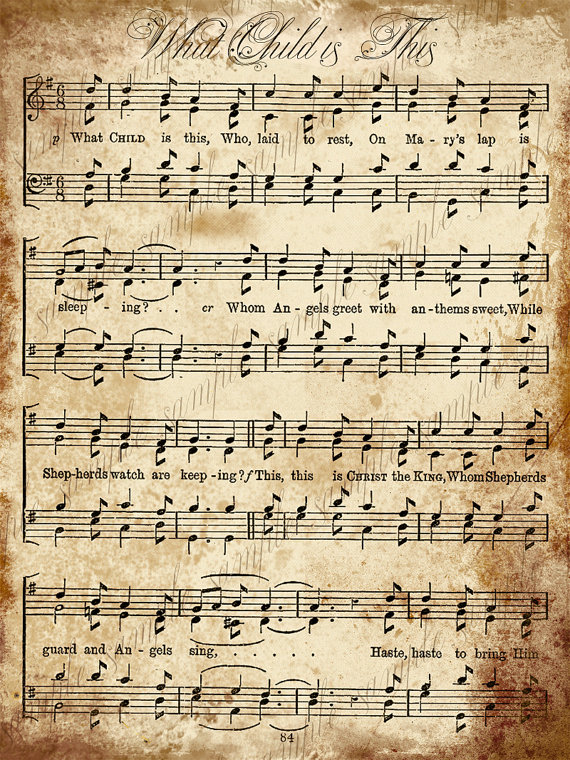
Christmas Carol Contemplations: What Child is This?


"The light shines in the darkness, and the darkness has not overcome it." John 1:5


https://www.pinterest.com/pin/AWrF4nK6txr-q-xZtu-
pfQHUP-j6zwKYGrPTu_qJscNhUBPS71VP438/

While others are rejoicing in the merriment of the season there are those who are mourning, alone or suffering from depression. For some the sparkling lights, parties and Christmas experiences highlight their pain.


Ironically Christmas Carols and Hymns have been one of the weapons in my arsenal for over 20 years as I've learned how, with God's Grace, to subdue depression when it tries to rally against me. There have been seasons in my life where listening to Christmas songs would give me courage and hope which is why my friends know I listen to them throughout the year when necessary.


It turns out that I'm not the only one who has found Hope through the meditations of Emmanuel's journey from heaven to earth to be with us.

The author of today's hymn almost lost his life to illness as a young man and his convalescence included experiencing depression in the following months. His response was to turn to scripture in search of truth and hope during his spiritual crisis. His search eventually led to his recovery and beautiful poetry later put to song.(For more read devotion at this link.)


Because I know the lyrics already I prefer this version by Lindsey Sterling
for the beauty, delicacy and emotion of it. In my heart I hear the words
 but I posted another one below in case you weren't familiar with the lyrics.

My prayer today: What child is this in Mary's lap is sleeping? It is you, Emmanuel. You who came to bring Hope and Light to darkened hearts. Help me to see You today and see your Light which has overcome the darkness. Use me to share your light with those around me.


Monday, December 1, 2014

One Bite at a Time: How to Study for Vocabulary Tests at EAL

"Mrs. Heather, how do I study for the tests we have on the roots and vocabulary words? And how can I do better on the test?"

The tests for the roots and vocabulary words you are assigned every week (taken from Roots and Fruits by Jill Dixon and in your course pack) are tested in two ways with a matching section and a word usage section. These are two very different skills- recall and critical thinking.

You will need to memorize your weekly roots (recall) and you'll need to understand how the vocabulary words are used in sentences (critical thinking). Here are three tips to prepare you to LEARN more effectively which is the main goal.

They will also help you remember information which will help you on your tests but remember, LEARNING is more advantageous than getting a high score on a test and subsequently forgetting everything after the test. (These study strategies apply to all areas of study.)

1) Do your vocabulary homework every week and do it over a couple of days instead of cramming it into one.

Your brain is like a forest. When you learn you are creating walking paths of information. The more you walk on the path the clearer the path becomes. When you don't walk the path it becomes overgrown and you have to rebuild the path. Walk your paths at least weekly and possibly daily if you really struggle a lot. In the younger class the vocabulary work is meant to be done every day for this very reason. Some kids like to cram it in. If you are one of those kids then make yourself take two days to complete all of the assignments instead of four. The repetition will help you learn but cramming will squeeze your brain like a sponge (and all those words will fall out!).

Older students do not have the same worksheets the younger students do but they can benefit from doing the creative learning activity listed on their weekly assignment sheet for their weekly vocabulary words ("Draw a picture, symbol, or write a rhyme or clue to help you remember the meaning.")


2) Review last weeks work every week.

This is the same idea I explained in Number 1. Every week you should go back over the vocabulary and roots you learned in the previous weeks. Use your flip book/flash cards to review the weekly roots and vocabulary. Play a game with your flashcards or with an online study tool like Quizlet (it creates review games for you when you enter your terms). This only takes a few minutes but will pay you back by reinforcing those pathways you are building. Read my other blog for more details about testing and study tools at EAL.

3) Study in Style! Use your Learning Style to Review: Re-read, rewrite or speak aloud the sentences you wrote.

Every week you write several sentences with your vocabulary words (the worksheets from Roots & Fruits in your course pack). Depending on your learning style you should review those sentences so you can reinforce how the words are used. Writing the words in sentences is the best way to understand how they are used....because you are using them when you write!

By reviewing and revisiting your homework from previous weeks you will be reinforcing what you have learned and making well worn pathways that are easier to walk on. This will also prepare you for how to study when you move on to higher education in college or technical school. Learning how to use these practices now will pay you back many times over.

Recommended Resources:


If you don't know your learning style you can use this guide
 to learn what it is and what techniques will help you
 learn in all areas of study.

Sunday, September 21, 2014

Creative Learning Is Critical Thinking: "Skits, Cartoons & Interviews? What's with all this creative stuff?"

"Ugh! Mrs. Jill, Why do I have to write a paragraph like I'm one of the characters from this book? Why can't I just answer some questions about what happened?"
"Akk! Why does Mrs. Heather make us draw political cartoons for geography and history homework? I already answered the questions from the reading, why do I have to do this?"
"Blech! Mom, "History in Action" mini projects and writing trivia questions?!  Why can't we just do worksheets instead?"
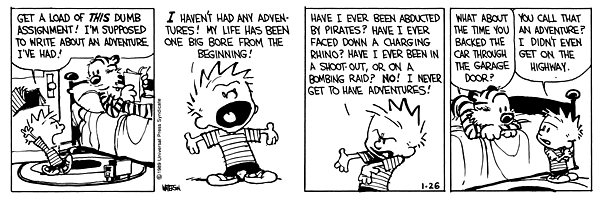
Students have a natural inclination to be creative already but when you make it 'homework' they may resist it.
http://img1.wikia.nocookie.net/__cb20130412040311/candh/images/5/53/Ch890126.gif


Imaginative writing, artistic expression and hands on projects usually thrill most of my students (especially elementary students and most homeschoolers) so it may be hard for you to believe but there are some students (usually high schoolers ) who don't like doing the 'fun' stuff built into the homework and class time at Jill Dixon's Eclectic Academy of Learning (EAL).

In fact, I've even had a rare parent question why we have so much fun in class and they occasionally wonder if we're learning anything when their teenagers come home saying they pretended to be living works of art or acted in a reality TV show about the settlers of Jamestown at class that day.  When having to make a choice about which assignments to complete these students or parents will skip the 'easy, fun stuff' in favor of the 'more serious learning' and traditional critical thinking questions.  (Please see notes at end of this article about what is recommended at EAL to complete for homework when pestilence or wanderlust descend upon your household.)

When my own family has to choose between assignments (usually because someone gets sick or we go out of town) I  will invariably choose the creative tasks every time because it benefits my students more in the long term than some of the other traditional learning expressions because  creativity requires higher thinking functions to complete them.

Wait, Mrs. Heather, did you just say the fun stuff is 'harder' than answering the questions?
Uncaging the Jabbering Parrot
Does Rodney's parrot understand what he is saying?
http://funny-pictures.picphotos.net/comics-funny-comics-strips-cartoons
-parrot-nose/img3.joyreactor.com*pics*post*comics-parrot-nose-535273.jpeg/
Yes, I did say that! Some may argue with me and please don't get me wrong.* Reading comprehension questions serve an important purpose but by themselves they are like a parrot in a cage repeating what is said around them. Does the parrot truly understand what it says?
Many times homework  questions are regurgitating facts* (not unlike a parrot) from the reading but the real critical thinking occurs when creativity happens.
When students have to "Make it Real" (an activity from Jill Dixon's Read With the Best literature curriculum) or complete another type of creative activity they are required to understand the material they have just read and be able to communicate what they have learned instead of parrot facts from a cage.
Creativity  is abstract thinking and forces the student to think beyond the facts of the story, such as in the "Make it Real" assignment from The Narrative of the Captivity of Mary Rowlandson, and imagine what else could have happened and what they might have done differently. In order to accurately write a paragraph about what would have happened if Mary Rowlandson had decided to approach her suffering in the complete opposite way of her world view the student must not just know how Mary Rowland  responded to suffering but understand why she made the choices she did. This type of activity requires both understanding and empathy which is critical thinking in action!
It's letting the parrot out of the cage so it can fly!
A student's cartoon depicting the boundary conflict
between New York & New Jersey over Ellis Island
shows they truly understand what happened.
This is HARDER than saying what happened (concrete thinking).  It requires truly thinking about what has been read and examining the narrative or the chronicle of history. The creative activities require students to conceptualize the facts and put them into a three dimensional world off of the page.  When this happens true comprehension and application takes place. 


It requires thoughtfulness and time which is usually why students (and sometimes parents) question the importance of these types of activities. Students have many tasks they must accomplish in their studies and it's easy to be short sighted when our 'to do' list feels very long. We want to check things off as fast as we can and get it done.
That's fine when checking off chores or a items from a shopping list but is that the only thing we want to teach our children? 
If our end goal is to enable our children to engage the world rather than be passive observers and be able to evaluate the very real problems they will face as adults then we need to teach them how to think critically and to understand the people they will live life with.  
Those are abilities and skills that can't be checked off a list but require time and effort as we challenge them to go beyond parrot jabber.
At the end of the day I want to make sure my students will be able to fly when the cage door opens.
Found at: http://media-cache-ak0.pinimg.com/originals/e9/fc/2e/e9fc2ead7103009ef06d288a39f39427.jpg
*When I say reading comprehension questions are regurgitating facts I am not referring to the application questions or short answer essay questions that require analysis. Rather, I am referring to questions that repeat facts from the reading such as the Who, What, When questions instead of the Why questions that analyze reasons why people or characters made the choices they made or How their choices impacted people around them. Those types of Why and How questions are incredibly important as I discuss in my blog "I Hate Poetry: The Importance of Humanities."
Important Note to EAL Parents about skipping homework assignments:
Some weeks we can't get all of the assignments done and must make a choice. Usually this is because little Hezekiah has the plague or your family has the opportunity to visit Aunt Ethel and Uncle Shamus in Glasgow. This is when I'm asked, 'What homework should we get done?" This is discussed at length in the information packet you received at orientation but the short version is:
  • Get the literature and history reading done  
  • Complete the writing assignments (if at all possible)
  • Do the creative assignments for history and literature 
  • Be sure to have your student go back and cover any material that will be tested.
  • Alternatively, do some of all homework sections (i.e.- odd numbered "?'s" instead of every "?")
  • Always communicate and excuse incomplete homework on the weekly assignment sheet
  • If students are going to have a lengthy absence because of severe illness or extended travel then please speak with the director to come up with a specific plan for your family and situation.
Why do these specific assignments:
~If they get the reading done then they have the content and can participate in class discussions.
~If they get the creative assignments done they will also be able to participate in class activities.
 ~Writing skills are often one of the primary reasons people enroll in EAL so don't get too far behind in that if at all possible but if a student has been keeping up with most writing assignments and has strong writing skills they will be okay if they miss one assignment. ***However, if they are working on their research paper in high school or their annual writing project in the younger class then they will have to make up writing assignments to avoid being behind.***
~Doing part of each type of homework assignment still reduces the work load but enables the student to participate in class and maintain or establish a routine (in the case of students with special needs).
When doing this be sure to complete all of the work that is tested on and reduce the load else where.


Wednesday, September 10, 2014

I Hate Poetry! (Or why do I need to study this stuff?): The Importance of Humanities

Question: Why should we read poetry or study literature, history or religion?
The short answer: To help us understand the world & the people who live in it.

Studying the humanities helps us to understand people and their experience. We encounter people we might never meet in other circumstances when we read literature, study history or examine religion.  We witness things we have not or might never live ourselves. Reading literature and studying humanities  helps expose students to the human experience and prepares them for the many different people and situations they will encounter when they head out into the world outside of their comfortable bubble.

 "When you read all of a sudden the world is bigger
 and nothing makes sense." ~Nathan Flood
(Something my son said and this is my first meme.)
Students  tend to live life with people they already understand or who have similar or identical world views as they do. While this can be a comfort and a source of strength it can also be a disadvantage.  When we live life in our comfortable bubble we assume everyone thinks like we do or makes decisions based on the same beliefs we have. This can lead to conflict and misunderstanding.


http://media-cache-ec0.pinimg.com/originals/
8b/c1/ee/8bc1eeaa9cfd72e8325d56efc9dd5856.jpg
How many conflicts both locally and globally have had tragic results because people didn't try to understand what other people believed, why they acted in a certain way or lacked the ability to cross communication boundaries? Whether it's a personal conflict with a friend or boss or a broader conflict  within communities or between nations the understanding, or lack there of, regarding values and beliefs can result in life altering consequences.

By examining the people we encounter in humanities and trying to understand their perspective (why they do what they do) we are preparing ourselves for the people we will encounter and the decisions we will need to make on an individual, business, community and global level. By exposing students to literature, history and religion in a way that causes them to examine these subjects with the goal of understanding people we are helping them to see beyond themselves, engage in empathy and hopefully help them become more compassionate and thoughtful of the people and circumstances around them.

Kid President reads poetry.
I can thank my humanities teachers in all of my literature, history and religious studies who helped equip me for the strange new world that awaited me outside the doors of my home and school and prepared me for the many people I would encounter.

When I was in high school I had not yet met as self centered a person as Oscar Wilde's Dorian Gray but I gained insight into how selfishness can lead to destruction of self and others. In college I encountered men who viewed women as Hemingway's heroes did but I wasn't completely surprised by their actions and knew to look for a different type of hero in my life. Observing the dysfunction of  the families in Tennessee William's plays prompted me to examine my own family's story. 

As I witnessed religious and moral hypocrisy I was reminded of Nathaniel Hawthorne's "Scarlet Letter" and then examined my own heart as I related to others. As I faced my own crossroads and needed courage I was reminded of Frost's diverging roads and Christ's reference to the narrow gate.

When community or world leaders made decisions about limiting free speech,  free press or the exercise of religion I remembered how leaders from the past used that to their advantage to control the populace.  I took my lessons from ordinary citizens I had read about in history who stood up to injustice in the past which impacted my decisions in the voting booth as a young adult and to take action as a citizen.

When I encountered broken or angry people I was more compassionate and able to interact with them in a positive way because I had 'met' people like them in my studies of literature, history and religion and could empathize with their situation instead of turning my back on them.

The world is getting smaller in this technological age. Our students will be working with and living alongside people from diverse walks of life, cultures and world views. They will need to be able to understand, empathize and communicate with people from all over the world. A strong foundation in the humanities can help equip them for just that task.

Authentic advancement and achievement mean understanding what it is to be a true citizen and not a repeater of unexamined platitudes, a compassionate and self-reliant human being, a good parent, a caring member of the community, and somebody who can be trusted to teach the next generation something other than greed, territoriality, anger, outrage, bitterness and a blinkered vision of the unmapped parts of the world — and the mind.~ Gina Barreca

Further perspectives on the importance of humanities:
Op-Ed: "Humanities at the Heart of Real Education" by Gina Barreca
YouTube Video: "How & Why We Read: Crash Course English Literature #1"

Heather Flood is the developer of the history curriculum at Jill Dixon's Eclectic Academy of Learning. For the last 10 years she has been teaching humanities courses to homeschoolers whom she hopes have gone on to become empathetic, compassionate future world changers who have learned how to learn, yearn to understand, and continue to ask the question "Why?" wherever they find themselves.

Thursday, July 17, 2014

One Bite at a Time: 3 Tips for Teaching Auditory Learners

"Jehoshaphat, how can you do your home work with those ear buds in your ears?"
"Marigold, can you please stop talking for two minutes?"
"Angus, Why can't you go read a book?!"

These are just some examples of exasperation from parents of auditory learners. It's likely the moms or dads exclaiming questions like these are not auditory learners* themselves and, probably just as likely, Mom or Dad are visual learners. When visual learning teachers communicate with auditory learners it can often feel as if they are speaking different languages without an interpreter. Today I'll attempt to be your interpreter with at least these three common frustrations.

Q: How can you possibly learn with all that 'noise'?
A: How can they learn without it? If auditory learners are stopped from learning through stimulating their auditory senses (listening or speaking) then they will STOP LEARNING!

Let them listen to music while reading or working BUT it should be instrumental music or light on the lyrics.  Catchy phrases (i.e.- earworms) will create more of a distraction, especially for anyone with ADD.  One of my kids loves to listen to the sound tracks of video games like Kingdom Hearts or Zelda. Keep the volume low to create a 'white noise' or just loud enough to drown out other distractions in the house.

Another option is a soundscape app such as this one that creates ambient noise. This would be very effective for people with ADD or studying in an environment with distractions (can you say 'siblings').

Q: How can I get my child to stop talking all the time while I'm trying to teach her?
A: Don't stop her. Redirect her. Give her an outlet to talk about what she's learned.

History Study Group:They don't look
 like they are having fun but they are.

Little siblings come in handy if you can find one. Auditory learners will be able to reinforce what they've learned if they can talk about it by teaching someone else. Have them make a video or skit to summarize what they've learned. Do an oral report; just be sure to have an attentive audience or this won't work well.

Charlotte Mason's narration technique is fantastic for auditory learners. The child reflects back to the parent what they have learned by telling you everything they remember about what they just learned whether that is cuttlefish, pharaohs or Wilbur from Charlotte's Web. Use critical reading questions from your curriculum as a leaping off point.

Learn Out Loud! Join or start a study group. This is a huge boon for teenagers. The energy of being with a couple of other kids and the discussion based learning that results is just what they need. Reading out loud together and discussing the assignment energizes an auditory learner.
Q: Reading assignments result in World War 3 in my house. How can I make my child read more?
A: Have them read less.  Seems counter intuitive but find as many resources as you can to reduce and augment reading with listening. (For more about cultivating reading follow the link to my blog post.)

Use audio books BUT have them read along with the hard copy whenever possible. Older students should read along while listening AND take notes as they read in their book highlighting important information (this pairs their secondary style of visual or tactile with their auditory and reinforces their reading skills).  Audible (a subscription service) and Librivox (free auditory books in the public domain) are my 'go to' tools. Libraries often have audio books but you can run into availability issues. My dyslexic daughter has re-read most of the audio books we purchased with our subscription which delights this mama and now she reads for fun without the audio books and reads most of her textbooks (albeit slower).

Watch documentaries. Isn't that visual? Actually it's both. If your child is an auditory learner they can likely recite to you the entire dialogue from Star Wars Episode IV: A New Hope without hesitating.  Whenever possible I supplement our studies with documentaries from Netflix and YouTube.

These are just a few bite sized nuggets for tweaking how you teach your auditory learner. I would love to hear your own tips, tricks and trade secrets for teaching according to learning styles so be sure to comment. You can also check out my Pinterest board "Eclectic Learning Styles".

*RESOURCES:  There are lots of tips for teaching an auditory learner found on the internet and in great resources available about learning styles. Identifying my children's learning styles and teaching them accordingly has reduced the level of stress in my home and resulted in REAL learning. A popular book about learning styles is The Way They Learn by Cynthia Tobias. If you want real world suggestions for teaching different learning styles I recommend Jill Dixon's Concise Learning Style's Assessment or POC4U (includes assessments, tips AND suggestions for curriculum matched to learning styles).  POC4U saved me time, money and my sanity. No joke.